Professional Hand Car Wash: 2026 Lakeway Guide
· 9 min read
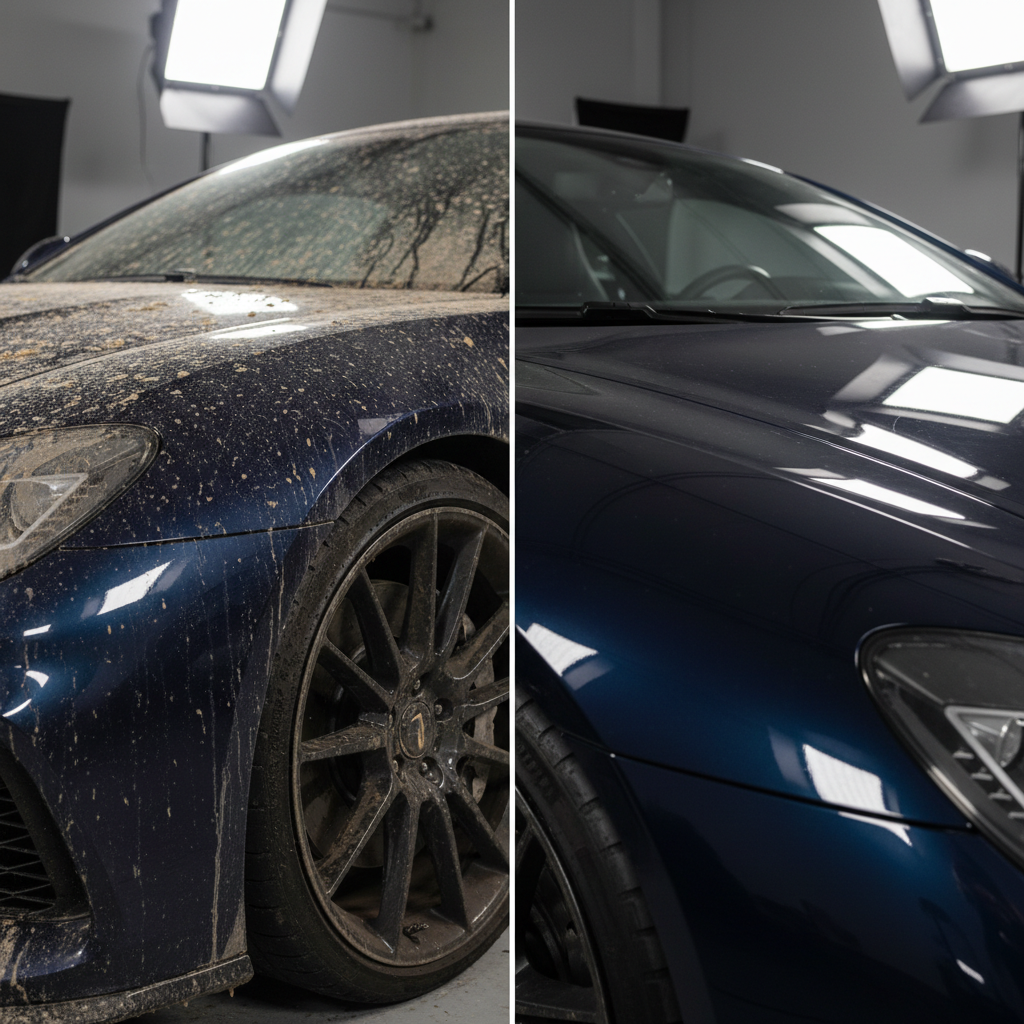
A quiet guide to choosing a professional hand car wash in Lakeway, Bee Cave, and the Lake Travis area.
8+ years on Lake Travis · Hand wash, not machines · By-appointment hand car wash in Lakeway, TX
- A professional hand car wash prioritizes controlled contact and paint safety.
- Lakeway and Lake Travis vehicles need routine care because sun, dust, pollen, and water spots build quickly.
- Ceramic coating helps maintenance, but it still needs proper hand washing.
- Detailing, paint correction, and headlight restoration solve problems a basic wash cannot.
- Choose a by-appointment hand wash that inspects the vehicle before recommending services.
A professional hand car wash is a controlled, by-hand cleaning process designed to remove road film, brake dust, pollen, and mineral residue without the harsh contact of an automatic tunnel. In Lakeway TX and around Lake Travis, the right hand wash matters because heat, sun, limestone dust, and lake traffic are hard on paint.
What is a professional hand car wash?
A professional hand car wash is not simply someone washing a vehicle with a mitt. It is a methodical service built around safe contact, clean materials, proper sequencing, and inspection. The goal is to clean the vehicle thoroughly while reducing the chance of swirl marks, towel marring, stained trim, or leftover grime in tight areas.
At Texas Hand Wash, the service is by appointment. That matters. A by-appointment hand wash gives the vehicle time and attention instead of pushing it through a volume line. The process is especially useful for vehicles that live near Lake Travis, commute through Bee Cave, sit outside in Lakeway sun, or regularly pick up dust around Hudson Bend and Spicewood roads.
Professional also means the wash is matched to the vehicle. A black SUV with soft clear coat is not treated like a white work truck. A ceramic coated vehicle is not washed the same way as neglected paint with bonded contamination. Trim, wheels, glass, interior touch points, and the vehicle’s current condition all change the approach.
Texas Hand Wash has 8+ years on Lake Travis, serving Lakeway, Bee Cave, Steiner Ranch, Hudson Bend, and nearby communities with a slower standard: hand wash, detailing, ceramic coating, and headlight restoration by people who inspect the car instead of depending on a conveyor.
Is a professional hand car wash better than an automatic car wash?
See our full-service hand wash options →
For paint care, a professional hand car wash is usually the better choice because the contact is controlled. Automatic tunnel washes are built for speed and consistency at scale. A hand wash is built for judgment. That difference is visible over time, especially on dark paint, luxury vehicles, Teslas, coated vehicles, and daily drivers exposed to Texas sun.
Automatic washes can be convenient, but brushes, high-volume contact systems, and shared materials may move grit across the surface. Even touchless systems can rely on stronger chemistry because there is no direct agitation. A professional hand wash uses a safer sequence: rinse loose debris first, clean wheels separately, wash upper panels before lower panels, and dry with clean towels and proper technique.
The comparison is not about drama. It is about risk. A tunnel wash is designed to clean many vehicles quickly. A hand wash is designed to clean one vehicle correctly.
| Category | Professional Hand Car Wash | Automatic Tunnel Wash |
|---|---|---|
| Paint contact | Controlled by trained hands, clean mitts, and staged towels | Shared contact equipment or stronger touchless chemicals |
| Time per vehicle | Scheduled around the vehicle’s condition | Built for rapid throughput |
| Best use | Well-kept vehicles, dark paint, ceramic coating maintenance, premium care | Quick rinse convenience when paint perfection is not the priority |
| Inspection | Human review of wheels, trim, glass, paint, and interior touch points | Limited or no individual inspection |
For drivers near Lakeway City Park, the Hill Country Galleria in Bee Cave, or marinas around Hudson Bend, the vehicle often carries a mix of dust, pollen, water spots, and sunscreen residue. A professional hand car wash gives those conditions the right response instead of the same one-size process every time.
How does a professional hand car wash work?
The best professional hand car wash follows an order. Order is what keeps dirt from being dragged across paint. The exact products may change with the vehicle, but the logic stays consistent.
- Initial inspection: The vehicle is reviewed for heavy soil, bug residue, wheel contamination, trim sensitivity, existing swirl marks, and coating behavior.
- Pre-rinse: Loose dirt is flushed away before any hand contact. This is one of the most important paint-safety steps.
- Wheel and tire cleaning: Wheels are handled with separate tools because brake dust and iron particles do not belong on paint wash media.
- Contact wash: A two-bucket method or equivalent controlled wash approach separates clean solution from rinse water so grit is not reintroduced.
- Panel sequencing: Upper panels are washed first. Lower doors, rocker panels, rear bumpers, and high-soil areas are handled last.
- Drying: Clean microfiber towels and proper technique reduce towel marks. Forced air may be used around mirrors, trim, grilles, and emblems.
- Final inspection: Glass, wheels, door jamb edges, and remaining water traps are checked before delivery.
That sequence may sound simple. It is not always easy. The discipline is in not rushing, not using dirty towels, not letting chemical dwell too long in the sun, and not treating every panel as if it has the same contamination.
I would rather wash fewer vehicles carefully than move more cars through a process that leaves avoidable marks behind.
If you are comparing local options, start with the core wash service here: full-service hand car wash in Lakeway TX. For drivers who prefer routine care, Texas Hand Wash also offers monthly memberships by appointment: membership">monthly hand wash memberships.
What makes a hand wash safe for paint?
Paint safety comes from reducing friction, separating dirty tools from clean ones, and understanding the surface before touching it. A safe hand wash does not depend on force. It depends on lubrication, patience, and clean materials.
The two-bucket method is a common example. One bucket holds wash solution. The other is used to rinse the mitt before it returns to the paint. This reduces the amount of grit carried back to the surface. Some studios use multiple mitts or multiple towels instead of the traditional bucket format. The principle is the same: do not reuse contaminated media on clean paint.
Pre-rinsing is another critical step. Sand, limestone dust, and road grit act like abrasives if they are rubbed into clear coat. In the Lake Travis area, that dust can be constant during dry months, especially around construction corridors and rural edges of Bee Cave, Steiner Ranch, and Spicewood.
Drying technique is often overlooked. A careful wash can still be harmed by aggressive towel work. Professional drying uses clean, soft towels and light pressure. On some vehicles, especially ceramic coated ones, water sheets off quickly because the surface is hydrophobic. That makes drying easier and reduces contact time.
A safe wash also avoids overpromising. If the vehicle already has swirl marks, a wash will not remove them. If there is bonded contamination, a standard wash may not release it. Those issues move into detailing, clay bar treatment, iron decontamination, or paint correction depending on the condition of the paint.
What should be included in a professional hand car wash?
A proper professional hand car wash should clean the visible exterior, address wheels and tires, wipe accessible door edges, clean exterior glass, and leave the vehicle dry without water running from mirrors and trim after delivery. Depending on the service level, it may also include light interior care such as vacuuming, dusting, cup holders, mats, and interior glass.
There is a difference between a wash and a full detail. A wash is maintenance. Detailing is correction, restoration, and deeper cleaning. The two support each other, but they are not the same service.
For example, a wash can remove fresh dust and road film. A detail may address embedded contamination, stained carpets, leather conditioning needs, and buildup in crevices. An exterior detail may include clay bar treatment to remove bonded contaminants that normal washing cannot lift. Iron decontamination can help dissolve ferrous particles from brake dust and rail dust. An IPA wipe-down may be used during coating or correction work to remove polishing oils before protection is applied.
Here is a practical way to think about it:
- Hand wash: Best for routine exterior and light interior maintenance.
- Detailing: Best for neglected interiors, stained surfaces, bonded contamination, and deeper cleaning.
- Paint correction: Best for reducing swirl marks, haze, and machine-wash damage.
- Ceramic coating: Best for longer-term paint protection and easier maintenance.
- Headlight restoration: Best when headlight oxidation makes lenses cloudy or yellowed.
If the vehicle needs more than maintenance, review detailing services in Lakeway TX. If headlights are hazy from sun exposure, see headlight restoration in Lakeway TX.
How often should you get a professional hand car wash in Lakeway TX?
Most well-kept vehicles in Lakeway TX benefit from a professional hand car wash every one to three weeks, depending on storage, mileage, paint color, weather, and whether the vehicle has protection. A garage-kept sedan driven lightly around Lakeway may need less frequent washing than an SUV that commutes daily through Bee Cave, Westlake, and Austin traffic.
The Lake Travis area creates a few specific wash triggers. Pollen can cling to damp paint in spring. Summer heat bakes bug residue and bird droppings quickly. Lake days bring sunscreen transfer, wet towels, sand, and mineral-heavy water. Construction dust near growing parts of Bee Cave and Spicewood can build up fast. If those contaminants sit, they become harder to remove safely.
Wash sooner when you notice:
- Bird droppings, bug residue, or tree sap on paint
- Brake dust buildup on wheels
- Water spots after sprinklers or lake-area parking
- Pollen film that returns after every drive
- Road film after rain, especially on lower panels
For owners who want the vehicle kept consistently clean, a monthly membership makes sense because it turns maintenance into a rhythm. Texas Hand Wash is not an express tunnel and does not sell one-off speed as the main value. The work is scheduled, handled by hand, and focused on preserving the vehicle’s condition over time.
How do ceramic coating and paint protection fit into hand washing?
Ceramic coating makes washing easier, but it does not eliminate washing. A coating adds a durable protective layer that can improve gloss, chemical resistance, and water behavior. Many coatings use SiO2 chemistry or related ceramic technology to create a slicker, more hydrophobic surface. That means dirt has a harder time bonding, and water tends to bead or sheet away more readily.
The important detail: ceramic coating still needs proper maintenance. Poor washing can still create marring. Minerals can still spot. Brake dust can still collect. The advantage is that a well-maintained coating gives the owner more margin and usually makes routine hand washing faster and cleaner.
Before a ceramic coating is applied, the paint usually needs preparation. That may include a thorough wash, clay bar treatment, iron decontamination, paint correction, and an IPA wipe-down before coating installation. Skipping preparation traps defects under the coating. Good coating work is less about the bottle and more about the prep.
Some vehicles only need a paint sealant rather than a ceramic coating. A paint sealant is generally easier and shorter-term. A ceramic coating is a stronger choice for owners who plan to keep the vehicle, maintain it properly, and want easier cleaning in Lakeway heat and Lake Travis conditions.
For coating-specific care, visit ceramic coating in Lakeway TX. A coated vehicle should still be washed carefully by hand, using coating-safe methods and clean materials.
What about Tesla vehicles and professional hand washing?
Tesla vehicles deserve careful washing for the same reason any modern vehicle does: soft trim, sensors, cameras, glass, and paint all need controlled handling. Many Tesla owners also care deeply about swirl marks because the vehicle’s simple body lines and large panels show defects clearly, especially on black, blue, and red paint.
Before any wash that involves movement, Tesla wash mode may be relevant depending on the model and situation. Tesla’s own documentation explains how wash mode can close windows, lock the charge port, disable certain automatic wiper functions, and prepare the vehicle for washing conditions. For a professional hand wash, the larger point is communication. The shop should understand how to handle the vehicle without guessing.
Hand washing is often preferred for Teslas because cameras, trim, flush door handles, and glass edges can hold water. Careful drying around mirrors, hatch areas, charge ports, and sensor zones helps prevent streaks and post-wash drips. If the Tesla has a ceramic coating, the wash process should preserve that hydrophobic behavior rather than strip or clog it with heavy residues.
Drivers from Steiner Ranch, Westlake, and Bee Cave often bring Teslas and other EVs to Lakeway for quieter care because they do not want tunnel contact or rushed drying. The vehicle is modern. The wash process should be measured.
How do you choose a professional hand car wash near Lake Travis?
Choose a professional hand car wash by looking at process, not slogans. Ask how the shop prevents cross-contamination between wheels and paint. Ask whether appointments are required. Ask how coated vehicles are maintained. Ask whether they offer detailing and paint correction when a wash is not enough.
Local experience also matters. Lakeway TX is not a mild environment for vehicles. Sun exposure, limestone dust, oak pollen, lake humidity, sprinkler water, and long Hill Country drives all leave different residue behind. A shop that works around Lake Travis every day will recognize those patterns.
Good signs include:
- Appointment-based service rather than rushed volume
- Separate tools for wheels, tires, paint, and interiors
- Clear distinction between washing, detailing, correction, and coating
- Experience with ceramic coating maintenance
- Honest inspection before recommending upgrades
- Respect for dark paint, luxury finishes, EVs, and older clear coat
Be cautious when a shop promises that a basic wash will remove scratches, permanent water spots, oxidation, or years of tunnel-wash damage. A wash cleans. Correction corrects. Restoration restores. The right recommendation protects both the vehicle and the owner’s expectations.
Texas Hand Wash serves Lakeway, Bee Cave, Lake Travis, Steiner Ranch, Hudson Bend, Westlake, and Spicewood by appointment. If the vehicle needs routine maintenance, start with the wash. If it needs more, the inspection will show it. To schedule, use book an appointment or contact the shop through Texas Hand Wash contact.
When is detailing better than a hand wash?
Detailing is better than a hand wash when the vehicle has contamination, staining, odor, oxidation, or defects that normal washing cannot address. A professional hand car wash is maintenance. Detailing is deeper, slower, and more restorative.
An interior detail may be the right choice when seats, carpets, mats, consoles, and vents need more than a light wipe. Leather conditioner may be appropriate for certain leather surfaces after they are properly cleaned, depending on the material and manufacturer guidance. Families around Lake Travis know the pattern: lake bags, snacks, sunscreen, sports gear, and pets can turn a clean cabin into a project quickly.
Exterior detailing becomes useful when paint feels rough after washing. That roughness often means bonded contaminants remain on the surface. Clay bar treatment and chemical decontamination can improve smoothness, but they must be used carefully. Aggressive clay can mar paint if used incorrectly. That is why inspection matters before choosing the process.
Paint correction is a separate category. If the vehicle has swirl marks from automatic washes or improper drying, polishing may be needed to refine the clear coat. Correction should be measured, especially on vehicles with unknown paint history. The goal is to improve the finish while preserving clear coat, not chase perfection recklessly.
Headlight oxidation is another case where washing will not solve the problem. Cloudy lenses usually need sanding, polishing, and protection through a headlight restoration process. In Texas sun, untreated lenses can haze again, so restoration should include a protective step.
What should you do between professional hand washes?
Between appointments, keep the vehicle out of avoidable contamination and resist the urge to dry-wipe dirty paint. Dry wiping is one of the easiest ways to create fine scratches. If the car is dusty, it needs a proper wash or at least a safe rinse process, not a quick towel pass.
Park away from sprinklers when possible. Irrigation water around Lakeway and Bee Cave can leave mineral spots, especially on hot panels. Remove bird droppings quickly and safely because they can etch into clear coat. Keep a clean microfiber towel in the vehicle for interior spills, but do not use that same towel on exterior paint.
For ceramic coated vehicles, avoid heavy waxes or unknown spray products that can mask the coating’s water behavior. If water stops beading, the coating may be contaminated rather than gone. A proper maintenance wash or decontamination can often restore performance.
For vehicles driven around marinas, golf courses, and lakeside neighborhoods near Hudson Bend and Lakeway, do not let wet towels, sunscreen, and lake gear sit inside for days. Interior materials can absorb odors and residue quickly in summer heat. Light maintenance is easier than correction later.
Sources
- Tesla Model Y Owner's Manual
- Consumer Reports: How to Wash Your Car
- U.S. EPA: Stormwater Discharges from Transportation Sources
Key Takeaways
- A professional hand car wash prioritizes controlled contact and paint safety.
- Lakeway and Lake Travis vehicles need routine care because sun, dust, pollen, and water spots build quickly.
- Ceramic coating helps maintenance, but it still needs proper hand washing.
- Detailing, paint correction, and headlight restoration solve problems a basic wash cannot.
- Choose a by-appointment hand wash that inspects the vehicle before recommending services.
Frequently Asked Questions
What is a professional hand car wash?
A professional hand car wash is a controlled, by-hand cleaning service using safe sequencing, clean wash media, proper drying, and inspection to clean the vehicle while reducing the risk of swirl marks and towel marring.
Is a professional hand car wash better than an automatic car wash?
For paint care, a professional hand car wash is usually better because contact is controlled, tools are separated by area, and the vehicle is inspected instead of being pushed through a one-size process.
How often should I get a professional hand car wash in Lakeway TX?
Most well-kept vehicles in Lakeway benefit from a professional hand wash every one to three weeks, depending on storage, mileage, paint color, weather, and whether the vehicle has ceramic coating or other protection.
Does ceramic coating replace regular hand washing?
No. Ceramic coating makes washing easier and improves hydrophobic behavior, but it still needs careful hand washing to remove road film, minerals, pollen, and brake dust.
Tags: professional hand car wash, Lakeway TX, Lake Travis, hand wash, ceramic coating
Ready for a Premium Hand Wash?
Texas Hand Wash provides 100% hand-washed car care in Lakeway, TX. Book your appointment or explore our Full Service Hand Wash, Auto Detailing, Ceramic Coating, and Unlimited Membership.