No Brush Car Wash Near Me: 2026 Ultimate Guide
· 8 min read
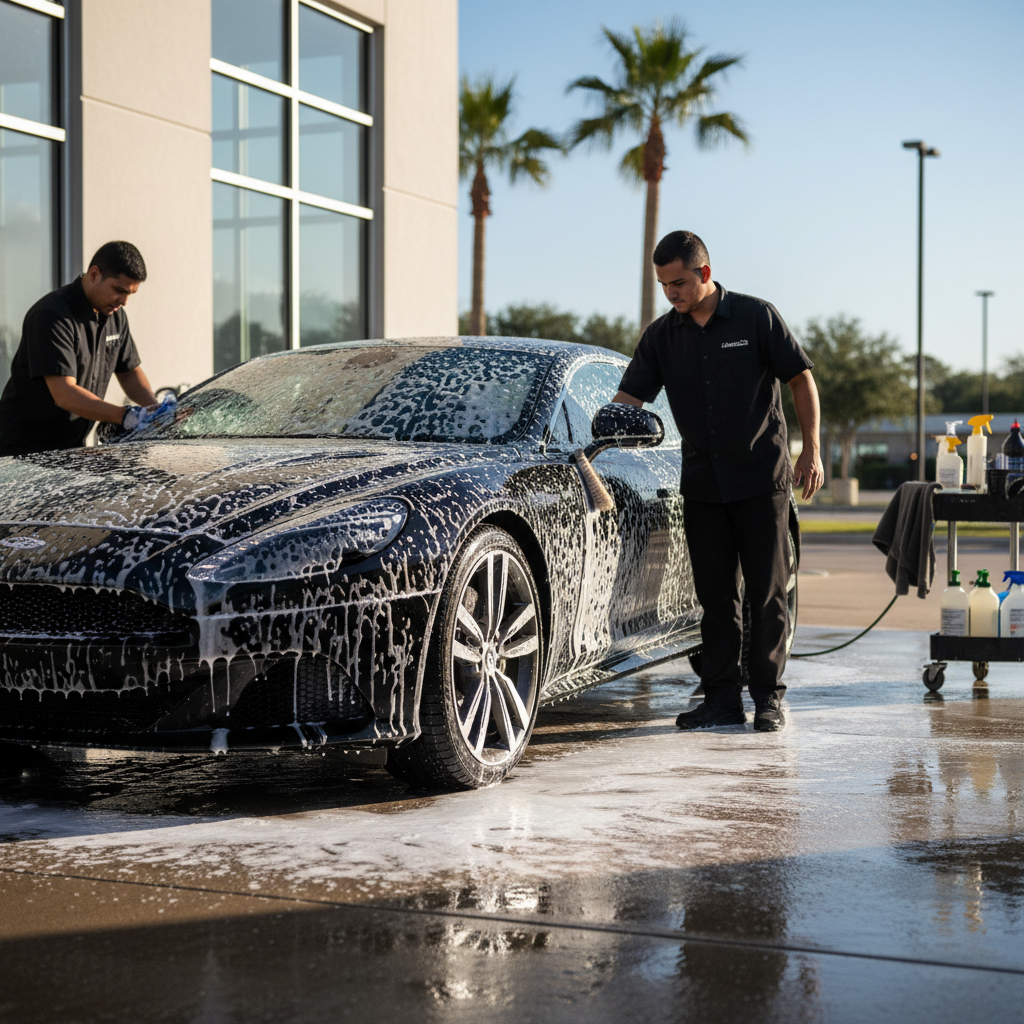
A practical Lakeway guide to no-brush car washing, paint safety, hand wash methods, and what to ask before you book.
8+ years on Lake Travis · Hand wash, not machines · By-appointment hand car wash in Lakeway, TX
- A no-brush wash is only safe when the full process is controlled.
- Brushless hand washing gives more paint control than a basic touchless bay.
- Lake Travis dust, pollen, and minerals make regular maintenance important.
- Ceramic coating still needs careful washing to stay clean and hydrophobic.
- Book detailing when contamination, oxidation, or swirl marks need more than a wash.
A no brush car wash near me should clean without spinning brushes, stiff bristles, or tunnel contact that can mark paint. In Lakeway TX and the Lake Travis area, the safest version is a controlled hand wash by appointment, using clean mitts, proper rinse technique, and careful drying.
What does “no brush car wash near me” actually mean?
“No brush” means the wash process does not rely on rotating brushes, foam fingers, or aggressive physical scrubbers to clean the vehicle. It can describe a touchless wash, a hand wash, or a detail wash. Those are not the same thing. The difference matters if you care about swirl marks, ceramic coating life, black paint, soft clear coat, or the finish on a newer Tesla, Porsche, Lexus, Mercedes, Rivian, or daily-driven truck.
A touchless automatic wash uses high-pressure water and stronger detergents to compensate for the lack of physical contact. A proper hand wash uses controlled contact: microfiber or lambswool mitts, fresh rinse water, safe shampoo, and a methodical top-down approach. One avoids brushes by using chemistry and pressure. The other avoids brushes by using trained hands and cleaner wash media.
At Texas Hand Wash, we are not a tunnel and not an express conveyor. We are a by-appointment hand wash studio serving Lakeway, Bee Cave, Hudson Bend, Steiner Ranch, Westlake, Spicewood, and the Lake Travis corridor. That appointment model lets us slow the process down where paint needs it: lower rocker panels, wheels, tight trim, door handles, and glass edges.
Is a no-brush car wash better for your paint?
See our full-service hand wash options →
A no-brush wash can be better for paint, but only when the whole process is controlled. Removing the brush is a good start. It does not automatically make the wash safe. Paint damage usually comes from contaminated contact, harsh chemicals, poor drying, or rubbing grit across the surface. Brushes are one source of that problem. Dirty towels, reused mitts, and rushed drying can cause the same result.
Lakeway drivers deal with limestone dust, pollen, oak debris, road film, sunscreen residue on handles, and mineral-heavy water. Around Lake Travis and Hudson Bend, vehicles also pick up boat ramp grime, humidity film, and fine dust from construction traffic. If that material is dragged across paint, it can leave light marring. On dark paint, the damage shows quickly as circular wash marks under fuel station lights or afternoon sun.
A safer no-brush process controls three things:
- Lubrication: The shampoo must give the mitt enough glide to release dirt without grinding it into the clear coat.
- Clean wash media: Mitts and towels need to be separated by vehicle area and replaced before they become loaded with grit.
- Drying technique: Drying should remove water without aggressive towel pressure, especially on soft paint.
That is why a hand wash with the two-bucket method, separate wheel tools, and careful drying often protects paint better than a basic “brushless” machine. The goal is not zero contact. The goal is clean, managed contact only where needed.
What is the difference between brushless, touchless, and hand wash?
The terms are often used interchangeably, but they describe different levels of contact and control. If you are comparing options in Lakeway TX, Bee Cave, or Steiner Ranch, use the table below as a plain-language filter before you choose.
| Wash type | How it cleans | Paint risk | Best fit |
|---|---|---|---|
| Brush wash | Spinning brushes or fabric strips contact the vehicle | Higher risk if equipment holds grit from previous cars | Drivers who prioritize speed over finish care |
| Touchless wash | High-pressure water and stronger detergents | Lower contact risk, but may be hard on protection or leave film | Light maintenance between proper washes |
| Brushless hand wash | Controlled microfiber contact, shampoo, rinse, and towel or air drying | Lowest risk when performed with clean media and discipline | Paint-conscious owners, coated vehicles, dark colors, luxury vehicles |
A touchless bay can be useful when you need to remove loose dust quickly, but it may not fully clean lower panels or oily road film. It can also rely on chemistry that may reduce the life of a paint sealant or weaken hydrophobic behavior over time. A hand wash takes more labor, but it can be adjusted to the vehicle. A ceramic-coated SUV, a black truck from Rough Hollow, and a family vehicle from Bee Cave should not all be washed with the same assumptions.
How should you choose a no brush car wash near me in Lakeway TX?
Choose based on process, not signage. “No brush” on a sign tells you what is missing. It does not tell you what is replacing it. Before booking, ask how the shop manages wash media, wheels, drying, and coated vehicles. Clear answers matter more than a long service menu.
Use these questions when evaluating a wash near Lakeway, Hudson Bend, or Steiner Ranch:
- Do they use dedicated mitts or towels for upper paint, lower panels, wheels, and exhaust areas?
- Do they rinse loose contamination before touching the paint?
- Do they use the two-bucket method or another controlled rinse system?
- Are wheel tools kept away from painted panels?
- How do they dry the vehicle, especially around mirrors, emblems, and trim?
- Do they understand ceramic coating maintenance and SiO2-compatible shampoos?
- Can they identify when a vehicle needs a clay bar or iron decontamination instead of more scrubbing?
- Are appointments spaced so the work is not rushed?
I would rather slow down a wash than force dirt off a panel with pressure or towel friction. That owner-operator approach is the difference between “clean enough” and clean without unnecessary paint wear.
If you want a recurring wash rhythm rather than one-off tunnel visits, see our membership">monthly membership options. Membership is how we keep the process consistent for local drivers who want their vehicle maintained properly, not corrected repeatedly.
Why does a hand wash matter around Lake Travis?
The Lake Travis area is hard on exterior surfaces in a quiet way. It is not just mud or obvious dirt. The issue is layered contamination: pollen in spring, mineral residue from sprinklers, fine limestone dust, bug residue after evening drives, and road film from RM 620 traffic. On vehicles parked near the water in Hudson Bend or driven between Lakeway and Bee Cave every day, that film builds up gradually.
A careful hand wash removes normal contamination before it bonds. That matters because bonded contamination is no longer a simple wash issue. Once iron particles, mineral spots, or oxidized film attach to the surface, the vehicle may need clay bar treatment, iron decontamination, or more involved detailing. If the paint already has swirl marks, a wash will not remove them. Paint correction is the proper route for reducing visible defects before applying durable protection.
We have spent 8+ years on Lake Travis seeing the same pattern: owners wait until the finish looks dull, then discover the dullness is not dirt alone. It is accumulated residue, light marring, and neglected protection. A good maintenance wash is less dramatic than correction, but it protects the finish better over time.
Can a no-brush wash protect ceramic coating?
Yes, if it is done with coating-safe methods. Ceramic coating is durable, but it is not a force field. It can still collect road film, water spots, mineral residue, and wash-induced marks. The coating’s hydrophobic behavior depends on a clean surface. If the coating is clogged with contamination, water may stop beading tightly even though the coating has not fully failed.
For coated vehicles, the wash should avoid harsh degreasers unless they are specifically needed. It should also avoid wax-heavy soaps that mask the coating’s behavior. A proper maintenance wash may use pH-appropriate shampoo and, when suitable, SiO2 maintenance products designed to refresh slickness without covering up issues. Before installing a coating, the process is different: wash, decontamination, paint correction if needed, and an IPA wipe-down before application. That preparation is what allows the coating to bond cleanly.
If your vehicle has coating protection or you are considering it, our ceramic coating service is built around preparation, not shortcuts. The wash method after installation matters because poor washing can make even a quality coating look tired.
What should happen during a proper brushless hand wash?
A safe brushless hand wash follows an order. The order prevents the dirtiest parts of the vehicle from contaminating cleaner painted areas. It also keeps the technician from using pressure where chemistry and dwell time would be safer.
1. Inspect the vehicle before water touches it
The wash should start with a quick inspection for heavy grit, fresh tar, bug residue, failing trim, cracked lenses, existing swirl marks, and delicate areas. Tesla owners should also use Tesla wash mode when appropriate so charge ports, wipers, and locks behave correctly during the service.
2. Rinse loose dirt thoroughly
Loose material should be removed before contact. The lower panels, rear bumper, hatch area, and wheel arches usually hold the most grit. Skipping this step increases the risk of dragging debris across the paint.
3. Clean wheels and tires separately
Wheel faces, barrels, lug areas, and tires carry brake dust and road grime. Those tools should not touch painted panels. Brake dust can include metallic particles that are more abrasive than ordinary dust.
4. Wash from top to bottom
The upper panels are usually cleaner, so they should be washed first. The lower doors, rocker panels, and rear bumper should be handled last with separate or freshly rinsed media. A two-bucket method helps keep wash solution cleaner during the process.
5. Rinse, then dry with care
Drying creates many wash marks when it is rushed. Soft towels, light pressure, and attention to trapped water around mirrors, trim, roof rails, and emblems reduce streaking and towel marring.
6. Check glass, jambs, and touch points
A full-service approach may include windows, door jamb edges, a light interior wipe, and vacuuming depending on the booked service. For deeper cabin work, an interior detail can address leather conditioner needs, dust in tight areas, and buildup that a maintenance wash should not promise to solve.
When is a no-brush car wash not enough?
A no-brush wash is maintenance. It is not correction, restoration, or deep decontamination. If paint feels rough after washing, there may be bonded contamination. If the hood looks hazy under direct sun, the issue may be oxidation or fine defects. If headlights look yellow or cloudy, that is headlight oxidation, not dirt on the lens.
Here are signs you may need detailing instead of another wash:
- The paint still feels gritty after a complete wash.
- Water behavior is flat even after the surface is cleaned.
- There are visible swirl marks under sunlight or garage lighting.
- Bug residue has etched into the front bumper or mirror caps.
- Water spots remain after washing and drying.
- Headlights look cloudy, yellow, or uneven.
In those cases, forcing a wash to do more can create damage. A clay bar can remove certain bonded contaminants, but it should be used with proper lubrication and followed by inspection because clay can mar soft paint. Iron decontamination targets embedded metallic particles. Paint correction levels the surface visually by refining defects in the clear coat. For cloudy lamps, headlight restoration is the appropriate service.
What should Tesla and EV owners know about no-brush washing?
Tesla and EV owners often search for no-brush options because glass, sensors, cameras, piano-black trim, and soft paint can make automatic washes feel risky. The concern is reasonable. A careful hand wash gives the technician time to work around cameras, charge ports, flush handles, and trim without relying on tunnel equipment.
For Tesla vehicles, Tesla wash mode is useful before washing. It helps keep the charge port locked, disables automatic wipers, closes windows, and prepares the vehicle for cleaning. Even with wash mode, technique still matters. High pressure should not be used carelessly near seals, cameras, sensors, or damaged trim. Drying around mirrors and hatch seams also matters because trapped water can streak after the vehicle leaves.
EVs are also heavier than many comparable gas vehicles, so tires can carry noticeable sidewall grime and road film. Wheel cleaning should still be separated from paint washing. For coated EVs, hydrophobic performance should be maintained with coating-safe wash products rather than aggressive all-purpose cleaners.
How often should you use a no-brush wash in Lakeway?
Frequency depends on storage, mileage, color, and protection. A garage-kept vehicle driven around Lakeway and Bee Cave may need a wash every two to four weeks. A vehicle parked outside near trees, used for school runs, or driven around Lake Travis construction zones may need more frequent care. Dark paint and coated vehicles benefit from consistency because dirt is easier to remove before it bonds.
Monthly memberships fit owners who want a predictable rhythm without deciding each time whether the vehicle is “dirty enough.” The real benefit is consistency. When a car is maintained regularly, each wash can be gentler because contamination has not had months to bond to the surface. That is especially useful for black SUVs, white trucks with iron fallout, and daily drivers that move between Steiner Ranch, Lakeway, and Westlake.
If your vehicle has been through months of automatic washes, start with inspection. It may need a detail or correction before a maintenance schedule makes sense. If the finish is already in good condition, regular brushless hand washing helps keep it that way.
What should you avoid when searching for a no-brush car wash?
Avoid judging only by speed, convenience, or the phrase “touch-free.” A wash can be brushless and still too aggressive. Strong detergent, poor drying towels, dirty wheel brushes, or rushed workers can all create problems. Also be cautious when a service promises to remove heavy contamination with only a basic wash. That usually means more friction than the paint needs.
Red flags include reused towels on multiple vehicles, one bucket for the whole car, wheel tools used on paint, harsh tire dressing overspray, and no clear answer about coated vehicles. Another warning sign is a menu that treats every vehicle the same. A lifted truck from Spicewood, a ceramic-coated sedan in Lakeway, and a commuter SUV from Bee Cave need different levels of attention.
The best no-brush wash is quiet and methodical. It is not defined by foam volume or how fast the vehicle moves through a line. It is defined by clean tools, correct sequencing, and respect for the surface.
How Texas Hand Wash approaches no-brush washing
Texas Hand Wash is built for owners who want controlled cleaning, not tunnel processing. We serve Lakeway TX, Lake Travis, Bee Cave, Hudson Bend, Steiner Ranch, Westlake, and nearby communities by appointment. Our service model is monthly memberships only for ongoing wash care, with detailing, ceramic coating, and headlight restoration available for vehicles that need more than maintenance.
The process is intentionally simple: inspect the vehicle, remove loose contamination, separate dirty areas from clean areas, wash with controlled contact, dry carefully, and recommend detailing only when the wash is no longer the right tool. That restraint matters. Not every vehicle needs a correction. Not every vehicle needs a coating. But every vehicle benefits from a wash method that does not add avoidable marks.
To schedule service or ask which option fits your vehicle, use our booking page or contact Texas Hand Wash. If you are near Lakeway Marina, Falconhead, Rough Hollow, Bee Cave, or Hudson Bend, we can help you decide whether a membership wash, detail, coating, or headlight service is the right next step.
Sources
- Tesla Owner’s Manuals
- EPA stormwater guidance for vehicle maintenance facilities
- Consumer Reports car washing guidance
- SEMA automotive industry resources
Key Takeaways
- A no-brush wash is only safe when the full process is controlled.
- Brushless hand washing gives more paint control than a basic touchless bay.
- Lake Travis dust, pollen, and minerals make regular maintenance important.
- Ceramic coating still needs careful washing to stay clean and hydrophobic.
- Book detailing when contamination, oxidation, or swirl marks need more than a wash.
Frequently Asked Questions
What does no brush car wash mean?
A no brush car wash cleans without spinning brushes, bristles, or tunnel contact. It may be touchless or hand washed, but the safest option for paint is controlled hand washing with clean wash media and careful drying.
Is a no-brush car wash safe for ceramic coating?
Yes, if the wash uses coating-safe shampoo, controlled contact, and careful drying. Harsh chemicals and dirty towels can reduce hydrophobic behavior or add marks even on a coated vehicle.
Is touchless the same as brushless hand wash?
No. Touchless washes use pressure and stronger detergents with little or no contact. A brushless hand wash uses controlled microfiber contact, proper lubrication, and area-specific tools.
How often should I wash my car in Lakeway TX?
Many Lakeway and Lake Travis drivers benefit from washing every two to four weeks, depending on storage, mileage, paint color, weather, pollen, mineral exposure, and whether the vehicle is ceramic coated.
When do I need detailing instead of a wash?
Choose detailing when paint feels rough after washing, water spots remain, headlights are oxidized, or swirl marks are visible. A wash maintains the vehicle; detailing addresses bonded contamination and defects.
Tags: no brush car wash, hand wash, Lakeway TX, Lake Travis, ceramic coating, detailing
Ready for a Premium Hand Wash?
Texas Hand Wash provides 100% hand-washed car care in Lakeway, TX. Book your appointment or explore our Full Service Hand Wash, Auto Detailing, Ceramic Coating, and Unlimited Membership.