Hand Dry Car Wash: 2026 Lakeway Ultimate Guide
· 9 min read
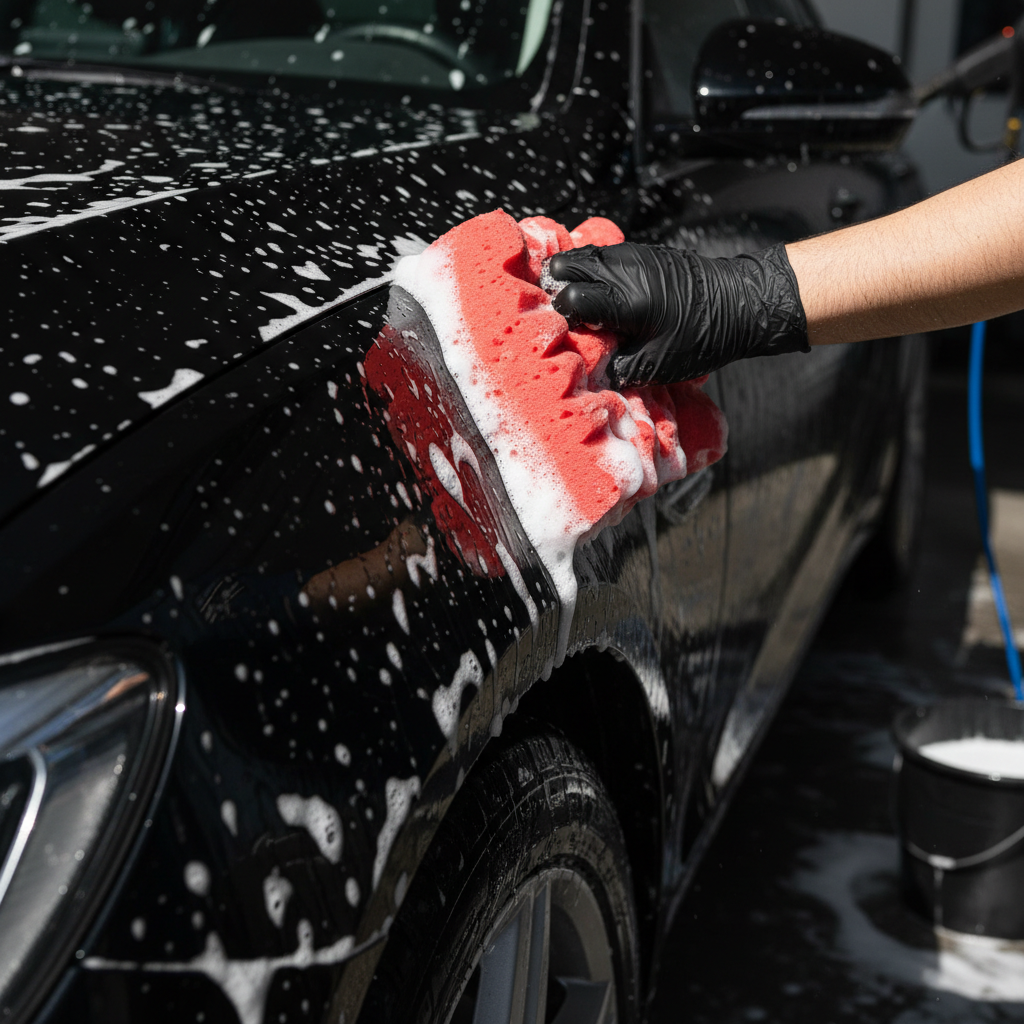
A practical guide to hand drying after a car wash in Lakeway TX, including towels, technique, coatings, and when professional care matters.
8+ years on Lake Travis · Hand wash, not machines · By-appointment hand car wash in Lakeway, TX
- A hand dry car wash reduces water spots when done with clean towels and light pressure.
- The wash process before drying determines how safe the drying step will be.
- Ceramic coating can make drying easier, but it still needs careful maintenance.
- Lakeway and Lake Travis conditions make controlled drying especially important.
- Regular by-appointment care is gentler than waiting for heavy buildup.
A hand dry car wash uses clean towels and controlled technique to remove rinse water after washing, instead of letting the vehicle air dry or pass through forced drying equipment. Done correctly, it reduces water spots, protects gloss, and lowers the chance of swirl marks on daily drivers around Lakeway TX and Lake Travis.
What is a hand dry car wash?
A hand dry car wash is a wash process where the final drying step is completed by hand with soft, clean, paint-safe towels. The key word is not only “hand.” It is “clean.” A towel can protect paint, or it can damage it, depending on the material, laundering, pressure, and surface preparation before drying.
In a proper hand wash, drying happens only after loose dirt, road film, pollen, brake dust, and residue have been safely removed. If contamination is still sitting on the paint, even a premium towel can drag particles across the surface. That is where swirl marks come from: repeated light marring from contact that should have been cleaner, softer, or better controlled.
At Texas Hand Wash, we are a by-appointment hand wash, not a tunnel. That matters because drying is not rushed by a conveyor pace. A black SUV from Steiner Ranch, a ceramic coated truck from Hudson Bend, and a Tesla coming in from Bee Cave may all need a different drying approach based on paint condition, coating behavior, trim design, and water retention points.
I look at the way water behaves on the vehicle before I choose the drying method, because the paint will tell you whether it is protected, contaminated, or overdue for deeper care.
Why does hand drying matter after a car wash?
See our full-service hand wash options →
Hand drying matters because water left on the surface can leave mineral deposits, especially in warm Central Texas conditions. Around Lake Travis, vehicles see sun, dust, oak pollen, construction grit, sprinkler overspray, and road film. If rinse water dries naturally on the paint or glass, minerals can remain behind as visible spotting.
Drying also affects how the finish looks immediately after the wash. A vehicle can be washed correctly and still look unfinished if mirrors drip, door handles bleed water, wheels retain moisture, or rear hatch seams release water after the vehicle leaves. The hand dry stage solves those details.
There is also a paint preservation reason. Modern clear coat is durable, but it is not immune to abrasion. A careful drying process uses minimal pressure, high-absorbency towels, and straight-line movement where needed. On ceramic coating or SiO2-treated surfaces, drying is usually easier because the surface is more hydrophobic. Water beads and sheets away faster, which reduces towel contact.
The wrong drying method creates avoidable issues:
- Water spots on paint, glass, chrome, and piano black trim
- Fine towel marring from pressure or contaminated towels
- Drips from mirrors, emblems, grilles, and door jambs
- Streaking on coated vehicles when drying aids are misused
- Uneven finish on darker colors after sun exposure
For a full wash designed around safe contact, see our full-service car wash in Lakeway TX. If your vehicle needs regular care without tunnel equipment, our membership">monthly memberships are built for that rhythm.
Is a hand dry car wash better than air drying or machine drying?
For most well-maintained vehicles, a hand dry car wash is better than air drying because it removes water before minerals can settle. It is also more controlled than machine drying because towels can address mirrors, seams, trim, glass edges, wheels, and panels individually. The advantage depends on towel quality and operator discipline.
Air drying sounds gentle because there is no contact, but it leaves water behind. On a shaded, filtered-water setup, that may be less of a problem. On a vehicle parked in the Texas sun after a rinse, air drying can quickly create spots. Once mineral deposits bond to the surface, they may require stronger cleaning, clay bar treatment, polishing, or paint correction depending on severity.
Machine drying varies widely. Some systems use blowers only; others pair drying with prior automated wash contact. Texas Hand Wash does not operate as a tunnel. We focus on hand wash methods because the goal is not speed at volume. The goal is clean paint, controlled contact, and a finished vehicle that looks right when it leaves.
| Drying method | Best use | Main risk | Finish quality |
|---|---|---|---|
| Hand dry with clean microfiber | Maintained paint, coated vehicles, dark colors | Towel marring if towels are dirty or pressure is heavy | High when performed correctly |
| Air drying | Filtered water, shaded areas, low-mineral rinse | Water spots from minerals and sun exposure | Inconsistent |
| Forced air drying | Mirrors, grilles, badges, wheels, seams | May not fully remove film or standing water alone | Strong as a support step |
| Automatic tunnel drying | Fast exterior maintenance | Limited detail around seams and retained water areas | Variable |
The strongest process often combines methods: hand drying for broad panels and gentle forced air for tight areas. This is especially useful on vehicles with complex front grilles, roof rails, mirror caps, emblems, and hatch trim.
How should a vehicle be washed before hand drying?
The wash before drying is what decides whether drying is safe. If dirt remains on the surface, the drying towel becomes the tool that moves it. A proper wash should remove loose contamination first, then clean the paint with lubrication and controlled towel or mitt contact.
A safer sequence starts with wheels and lower areas, because those are usually the dirtiest. Brake dust, tire dressing residue, road film, and grit can migrate if the process is careless. From there, the body is rinsed thoroughly. A foam or pre-soak can help loosen film, but it does not replace physical cleaning. Soap chemistry, dwell time, and wash media all matter.
The two-bucket method is common for a reason. One bucket holds wash solution. The other is used for rinsing the mitt. Grit guards or careful mitt management help reduce the chance of putting abrasive particles back onto paint. The principle is simple: keep dirty media away from clean panels.
Some vehicles need more than a maintenance wash. If the paint feels rough after washing, bonded contaminants may be present. A clay bar can remove bonded particles, but it should be used with proper lubrication and only when needed. Iron decontamination is another step for embedded ferrous particles, often visible as small orange specks or roughness on lighter paint. Those processes are detailing steps, not routine wash steps for every visit.
Before ceramic coating installation, the process goes further. Paint correction may be needed to refine defects. An IPA wipe-down is typically used before coating to remove polishing oils and residue so the coating bonds correctly. That is a different service category from a standard hand dry car wash, but the logic is connected: a clean, prepared surface is always easier and safer to dry.
For deeper exterior and interior work, our detailing services in Lakeway TX cover the steps beyond routine washing.
What towels are best for a hand dry car wash?
The best towels for hand drying are high-quality microfiber drying towels that are clean, soft, absorbent, and reserved for paint. Towel type matters, but towel condition matters more. A premium towel that has touched the ground, collected grit, or been washed with the wrong products should not touch paint.
Good drying towels usually have deep fibers and high absorbency. They should lift water without requiring hard pressure. Some are plush twist-loop designs. Others are soft pile microfiber. The right choice depends on the paint, coating, and operator preference. The common standard is controlled contact with minimal pressure.
Towel care is part of the service, not an afterthought. Towels used for wheels, exhaust tips, tires, and dirty jamb areas should be separated from paint towels. Microfiber should not be laundered with cotton lint. Fabric softeners can reduce absorbency and leave residue. Heat can damage fibers. Storage should keep towels clean until use.
On ceramic coating, drying towels should glide easily when the coating is healthy. Hydrophobic behavior helps water move off the surface quickly. If a coated vehicle suddenly feels grabby, dries unevenly, or holds water flat, the coating may be clogged with road film or mineral deposits. It may not be failed; it may need proper decontamination or a coating-safe maintenance wash.
A paint sealant or SiO2 spray can sometimes support drying and gloss, but it should not be used randomly. Layering products without understanding the existing protection can cause streaks, smearing, or uneven behavior. On darker vehicles in Lakeway TX, product control matters because streaking shows quickly under sun.
How do professionals dry a car without leaving swirl marks?
Professionals avoid swirl marks by reducing friction. That starts before the drying towel ever touches the car. The paint must be fully rinsed, properly washed, and inspected for remaining grit. The towel must be clean. The drying motion must be light. Pressure is the enemy.
A careful professional drying process often looks like this:
- Final rinse to move loose water from upper panels downward
- Optional sheeting rinse on protected paint to reduce standing water
- Soft drying towel laid or lightly drawn across broad panels
- Separate towels for lower panels, wheels, and jamb edges
- Forced air around mirrors, badges, grilles, handles, and trim gaps
- Final glass and drip inspection before delivery
Movement should be deliberate. Scrubbing during drying is a warning sign. If a bug mark, sap spot, tar spot, or mineral deposit remains after the wash, the drying towel should not be used to fight it. That spot needs the right cleaner or detail process. Drying is for water removal, not defect removal.
Dark paint makes mistakes obvious. Black and deep blue vehicles around Bee Cave, Steiner Ranch, and Westlake often show towel trails and wash-induced marks faster than silver or white vehicles. The paint is not necessarily softer, but the contrast makes marring easier to see. Good technique matters more when the finish is unforgiving.
For Tesla owners, Tesla wash mode can help prepare the vehicle for washing by securing certain vehicle functions during the process. It does not change the need for safe towels, clean wash media, and careful drying. Frameless windows, cameras, sensors, gloss black trim, and large glass areas all benefit from a patient approach.
Can a hand dry car wash protect ceramic coating?
Yes, a hand dry car wash can help protect ceramic coating when the wash chemistry and towel technique are compatible with coated surfaces. Ceramic coating is not a force field. It can reduce maintenance difficulty, improve hydrophobic behavior, and support gloss, but it still needs safe washing and drying.
A coated vehicle should release water more easily. That means less towel contact, faster drying, and fewer chances to mar the surface. However, if the coating is washed with harsh products, dried with dirty towels, or exposed to repeated mineral spotting, performance can decline. Maintenance is what keeps the coating behaving like a coating.
Some coatings are supported by SiO2-based maintenance products. Used correctly, those products can refresh slickness and water behavior. Used too heavily, they can streak. The key is restraint. More product is not better if the surface cannot accept it evenly.
Before installing a coating, the paint often needs preparation. That can include clay bar service, iron decontamination, paint correction, and IPA wipe-down. After coating, the maintenance wash should be gentler, not careless. Coated vehicles still collect pollen, dust, road film, and lake-area grime from drives along Lake Travis, Hudson Bend, and Ranch Road 620.
If you are considering long-term protection, see our ceramic coating service in Lakeway TX. If the vehicle is already coated, book maintenance through our appointment page so the wash is handled with the right expectations.
What should Lakeway and Lake Travis drivers consider?
Lakeway and the Lake Travis area create a specific maintenance environment. Vehicles sit in intense sun, collect fine dust, move through oak pollen seasons, and often park near sprinklers or irrigation overspray. Weekend drives between Lakeway, Bee Cave, Hudson Bend, and Spicewood add road film and insects. Boats, trailers, golf carts, and lake traffic add their own mix of grime.
Water spotting is a common concern because heat speeds evaporation. If a vehicle is washed in direct sun and left wet, spotting can appear quickly. A hand dry process helps by removing water before it bakes onto the surface. Glass, hood panels, roof lines, and horizontal trunk areas usually show spotting first.
Trim design also matters. Large SUVs and trucks common around Lake Travis hold water in mirrors, roof channels, bed rails, badging, running boards, and grille openings. A quick wipe may make the panels dry, but hidden water can run out later and leave streaks down the doors. A patient drying process uses air and towels together to reduce that.
Interior needs often travel with exterior care. A wash visit may reveal dust in door pockets, sunscreen on leather, or lake-day residue in cargo areas. An interior detail can address that more thoroughly than a basic wipe. Leather conditioner may be appropriate after cleaning certain leather surfaces, depending on material type and condition. Headlight oxidation is another local issue on vehicles that sit outside in the sun; restoration can improve clarity when the lens is still serviceable. Learn more through our headlight restoration in Lakeway TX page.
Texas Hand Wash has 8+ years on Lake Travis serving drivers who want a quieter, more controlled process. Monthly memberships are for clients who prefer consistent upkeep rather than occasional rescue work.
How often should you get a hand dry car wash?
Most vehicles in Lakeway TX benefit from regular washing before contamination becomes stubborn. The right interval depends on where the vehicle sleeps, how often it is driven, whether it is coated, and how much exposure it gets to pollen, sprinklers, road construction, and lake traffic.
A garage-kept ceramic coated sedan may stay cleaner longer than a black truck parked outside near trees. A daily driver commuting between Bee Cave and Austin may collect more road film than a weekend vehicle near The Hills. A family SUV used around Steiner Ranch schools, sports fields, and lake access points may need more frequent interior and exterior attention.
There is no universal schedule, but there is a reliable principle: wash before dirt bonds. Once contamination has baked into the surface, maintenance becomes correction. That can mean stronger chemicals, clay, polishing, or more labor. Routine care is gentler.
Monthly memberships work well for owners who want a consistent baseline. They are not designed as a race through a tunnel. They are designed for scheduled upkeep with a hand wash process, careful drying, and attention to the areas that make a vehicle feel truly clean.
What are the signs of a poor hand dry car wash?
A poor hand dry car wash usually leaves evidence. The most obvious signs are towel streaks, water spots, lint, missed drips, or fresh marring visible in sunlight. Some signs appear immediately. Others show later when the vehicle is parked under bright light.
Watch for these details:
- New circular marks visible in sun after the wash
- Water running from mirrors after driving away
- Dirty towel residue on lower doors or rocker panels
- Streaks on glass, screens, or gloss black trim
- White mineral rings on paint after drying
- Over-applied tire shine sling on lower body panels
A good shop will not treat these details as minor. They are the finish. Anyone can wet a vehicle and wipe it down. The difference is process: clean towels, proper sequencing, separate media, controlled drying, and a final inspection before handoff.
If a vehicle already has heavy swirl marks, drying technique alone will not remove them. Paint correction is the service that levels or refines defects in the clear coat. A hand dry car wash can help prevent new damage, but it cannot undo years of poor washing by itself.
How can you maintain the finish between appointments?
Between appointments, the safest maintenance decision is often restraint. Do not wipe a dusty vehicle with a dry towel. Do not chase bird droppings across the paint with a napkin. Do not use household glass cleaner on every surface. Small shortcuts can create permanent marks.
If you need to address fresh contamination, use the right product, clean microfiber, and light pressure. Bird droppings, bug remains, and sap should be softened before removal. If the vehicle is heavily dusty, wait for a proper wash. A dry wipe on Texas dust can mark paint quickly.
For coated vehicles, use coating-safe products and avoid aggressive cleaners unless needed. If water behavior changes, the surface may need a proper wash or decontamination, not a random topper. Keep towels separated at home if you maintain small areas yourself. Paint towels should never become wheel towels.
When in doubt, schedule the wash. It is less invasive to clean a vehicle correctly than to repair damage from improvised care. You can reach us through our contact page if you are unsure whether your vehicle needs a wash, detail, coating maintenance, or correction.
Sources
Key Takeaways
- A hand dry car wash reduces water spots when done with clean towels and light pressure.
- The wash process before drying determines how safe the drying step will be.
- Ceramic coating can make drying easier, but it still needs careful maintenance.
- Lakeway and Lake Travis conditions make controlled drying especially important.
- Regular by-appointment care is gentler than waiting for heavy buildup.
Frequently Asked Questions
What is a hand dry car wash?
A hand dry car wash is a wash process where clean, soft towels are used to dry the vehicle after rinsing instead of relying on air drying or tunnel drying equipment.
Is hand drying better than air drying?
Hand drying is usually better for preventing water spots because it removes rinse water before minerals dry on the paint and glass.
Can hand drying cause swirl marks?
Hand drying can cause swirl marks if the vehicle is not fully clean, the towel is contaminated, or too much pressure is used. Proper wash prep and clean microfiber reduce the risk.
Is hand drying safe for ceramic coating?
Yes. Hand drying is safe for ceramic coating when clean towels, coating-safe products, and light pressure are used.
How often should Lakeway drivers get a hand dry car wash?
Frequency depends on storage, driving, coating, and exposure, but regular washing before contamination bonds is gentler than waiting for heavy buildup.
Tags: hand dry car wash, Lakeway TX, Lake Travis, hand wash, ceramic coating
Ready for a Premium Hand Wash?
Texas Hand Wash provides 100% hand-washed car care in Lakeway, TX. Book your appointment or explore our Full Service Hand Wash, Auto Detailing, Ceramic Coating, and Unlimited Membership.