Deionized Water Car Wash: 2026 Lakeway Guide
· 9 min read
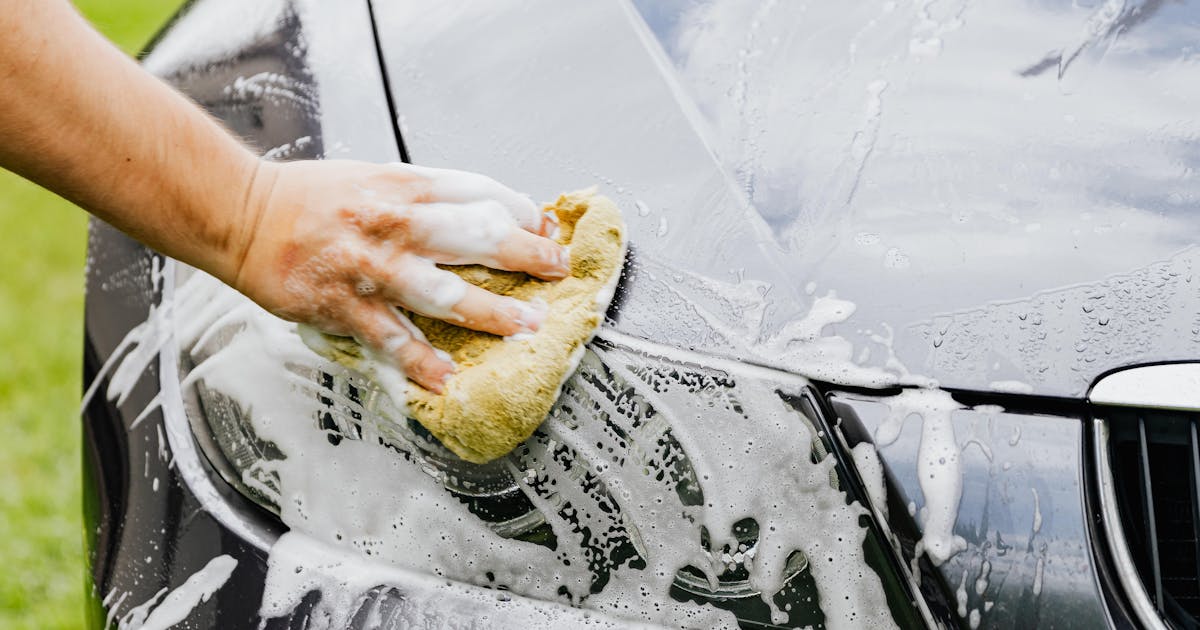
A clear guide to deionized rinse water, mineral spotting, hand washing, and finish protection for Lakeway and Lake Travis vehicles.
8+ years on Lake Travis · Hand wash, not machines · By-appointment hand car wash in Lakeway, TX
- DI water reduces rinse-related mineral spots.
- Safe hand washing still matters more than water alone.
- Lake Travis hard water can etch if ignored.
- Ceramic coatings still need careful drying and maintenance.
- Detailing is needed when spots or contamination are bonded.
A deionized water car wash uses purified rinse water with minerals removed, so it dries with fewer water spots on paint, glass, trim, and wheels. Around Lakeway TX and Lake Travis, where hard water and sun can mark a finish quickly, DI water is best used with a careful hand wash and proper drying.
What is a deionized water car wash?
A deionized water car wash is a wash process that uses water passed through ion-exchange resin to remove dissolved minerals. Those minerals are the reason ordinary tap water can leave white spotting after it dries. Calcium, magnesium, sodium, and other dissolved solids remain on the surface after water evaporates, especially on warm paint or glass.
Deionized water, often called DI water, is different from simply filtered water. A sediment filter can remove particles. A carbon filter can reduce odor or chlorine. Deionization targets charged mineral ions. For car washing, that matters most during the final rinse because the rinse water is what remains on the vehicle just before drying.
DI water is not a shortcut for safe washing. It does not replace proper soap, mitt technique, wheel care, or microfiber drying. It does, however, make the final stage cleaner and more forgiving. On black paint, tinted glass, piano-black trim, and coated wheels, the difference can be visible.
At Texas Hand Wash, we treat water quality as one part of the finish-care system. The other parts are controlled contact, clean wash media, patient drying, and knowing when a vehicle needs more than a wash. We are a by-appointment hand wash, not a tunnel, and that changes the way the whole process is handled.
Why does Lakeway hard water leave spots on vehicles?
See our full-service hand wash options →
Water spots form when water evaporates and leaves minerals behind. In the Lake Travis area, vehicles often deal with hard water from sprinklers, marina exposure, driveway rinses, and fast drying under Texas sun. Lakeway, Bee Cave, Hudson Bend, and Steiner Ranch drivers know the pattern: the car looks clean while wet, then the spots appear as it dries.
Fresh water spots may wipe away if addressed quickly. Older spots can bond more tightly, especially after repeated heat cycles. On glass, they can reduce clarity. On clear coat, they can create a dull, freckled look. On trim, they may show as chalky edges. When minerals sit long enough, they can etch into the surface and require polishing rather than washing.
There are three common spot types we see around Lakeway TX:
- Surface mineral spots: visible residue sitting on top of paint or glass.
- Bonded deposits: tougher mineral buildup that resists a normal wash.
- Etching: marks that have affected the clear coat or glass surface and may need correction.
DI water helps prevent new mineral residue during the rinse stage. It cannot undo etched damage by itself. That is where clay bar service, iron decontamination, paint correction, or glass polishing may become relevant depending on the surface and severity.
I look at rinse quality, surface temperature, and drying behavior before deciding how aggressive any wash process should be. A vehicle parked near Lake Travis may need different handling than a garage-kept car in The Hills or a daily driver commuting through Bee Cave Road construction dust.
Is deionized water better than filtered water for washing a car?
For the final rinse, yes, deionized water is usually better than basic filtered water because it removes dissolved minerals rather than only trapping visible particles. For the full wash process, the best result still comes from combining quality water with a proper hand wash, safe chemistry, and clean microfiber towels.
Many people use the words filtered, softened, distilled, reverse osmosis, and deionized as if they mean the same thing. They do not. Each method affects water differently. For car care, the question is simple: what is left behind after the water dries?
| Water type | What it does | Best use in car washing |
|---|---|---|
| Tap water | May contain minerals that remain after evaporation | General cleaning only if dried immediately and carefully |
| Softened water | Exchanges some hardness minerals but may still leave residue | Can improve soap feel, but not always spot-free |
| Carbon filtered water | Reduces chlorine, odor, and some contaminants | Useful support filtration, not a true spot-free rinse |
| Reverse osmosis water | Removes many dissolved solids through a membrane | Strong option for rinse water when maintained properly |
| Deionized water | Removes charged mineral ions through resin | Excellent final rinse when low total dissolved solids are maintained |
The catch is maintenance. DI resin becomes exhausted over time. Once it is spent, mineral levels rise and spot-free performance drops. A true DI setup should be monitored so the final rinse stays clean. Otherwise, a driver may think they are using spot-free water while still leaving deposits behind.
Water quality also depends on the surface. A ceramic coating with good hydrophobic behavior can shed water quickly, but it can still spot if minerals dry on top. A paint sealant may help temporarily, but it is not a substitute for careful drying. Raw, neglected paint can hold water and contamination in ways that make any rinse less predictable.
How does DI water fit into a proper hand wash process?
DI water is most effective near the end of the wash, after dirt has been safely lifted and rinsed away. A proper process protects the paint before the final rinse ever touches it. If grit is dragged across the surface first, spot-free water cannot prevent swirl marks.
For a premium hand wash in Lakeway, the process should be controlled from start to finish:
- Inspect paint, wheels, glass, trim, and badges before contact.
- Rinse loose dust and grit from the surface.
- Use a pH-appropriate soap with clean wash media.
- Wash from cleaner upper panels to dirtier lower sections.
- Use a two-bucket method or equivalent media-control system.
- Rinse thoroughly, ideally finishing with DI water.
- Dry with soft microfiber towels and forced-air support where appropriate.
- Check mirrors, emblems, wheel faces, door jamb edges, and glass after drying.
The final rinse is not a license to let the car air dry in direct sun. DI water greatly reduces spotting risk, but any water can carry soap residue, loosened contamination, or runoff from crevices. Drying still matters, particularly around side mirrors, grilles, spoilers, fuel doors, roof rails, and liftgate seams.
Owners of electric vehicles should also consider model-specific wash settings. Tesla wash mode, for example, helps prepare the vehicle for washing by managing certain functions. That does not mean the car should be pushed through a harsh tunnel. It simply means the vehicle should be set up properly before a careful hand wash.
For drivers looking for ongoing finish maintenance, our full-service hand wash in Lakeway TX is built around controlled contact and appointment pacing. For clients who want scheduled upkeep rather than one-off timing, our membership">monthly memberships keep the maintenance rhythm simple.
Can deionized water prevent water spots completely?
DI water can significantly reduce rinse-related water spots, but it cannot guarantee a vehicle will never spot. Spots can still come from sprinklers, rain, lake mist, road film, soap residue, dirty towels, contaminated trim, or water trapped behind emblems and mirrors. Prevention is a system, not one product.
On Lake Travis weekends, a clean vehicle can be exposed to pollen, sunscreen transfer, road dust, boat-ramp spray, and hard sprinkler water in the same day. DI water helps during the wash, but the vehicle still lives in the real world. The goal is to reduce avoidable damage and make routine cleaning safer.
To minimize spotting between washes:
- Avoid parking near active sprinklers in Lakeway, Bee Cave, and Hudson Bend lots.
- Do not let tap water dry on hot paint after a driveway rinse.
- Use proper drying towels rather than bath towels or shop rags.
- Address bird droppings, bug residue, and mineral water quickly.
- Maintain protection with ceramic coating, SiO2 spray maintenance, or a quality sealant when appropriate.
Protection changes how water behaves. Hydrophobic surfaces release water more easily, which reduces the amount left behind. But a coating can still develop mineral spotting if hard water dries repeatedly. A coated car is easier to maintain, not immune from neglect.
If spotting is already present, the fix depends on depth. A wash may remove light residue. Chemical decontamination may help with bonded minerals or iron particles. A clay bar can remove certain above-surface contaminants, but it must be used carefully because aggressive claying can mar paint. If the marks have etched the clear coat, paint correction may be the only way to improve them.
Does DI water matter if your vehicle has ceramic coating?
Yes. DI water matters on ceramic coated vehicles because mineral deposits can still sit on top of the coating. A ceramic coating improves slickness, chemical resistance, gloss, and hydrophobic behavior, but it does not make the vehicle self-cleaning. Better rinse water helps preserve the coating’s appearance and makes maintenance easier.
Ceramic coating maintenance should be gentle and consistent. The goal is to keep the coating surface free of road film and mineral buildup so it can perform as designed. When a coating stops beading evenly, the issue is often contamination on the coating rather than coating failure.
A well-maintained coated vehicle may need:
- Regular pH-neutral hand wash service.
- Careful drying to prevent mineral deposits.
- Periodic SiO2 maintenance products when suitable.
- Iron decontamination when brake dust or rail dust bonds to the surface.
- Inspection before any clay bar or polishing work.
Before installing a ceramic coating, the surface preparation is different from a maintenance wash. Paint may need decontamination, paint correction, and an IPA wipe-down so the coating bonds to clean, corrected paint. DI water can support the prep process, but it does not replace polishing skill or surface inspection.
For vehicles that live outside near Lake Travis or commute between Steiner Ranch and downtown Austin, coating maintenance should be realistic. Dust, sun, and water exposure add up. Our ceramic coating service in Lakeway TX is designed for owners who want durable protection and a maintenance plan that fits how the vehicle is actually used.
What are the limits of a deionized water car wash?
The main limit is that DI water only controls mineral content in the water being used. It does not remove scratches, oxidation, tar, tree sap, etched spots, interior soil, or brake dust by itself. It is a rinse advantage, not a full detailing solution.
A deionized water car wash will not fix swirl marks from tunnel brushes or poor towel use. It will not restore faded plastic trim. It will not correct headlight oxidation. It will not deep clean leather, carpets, or vents. Those needs fall under detailing, correction, or restoration work.
It is also possible to misuse good water. If a vehicle is washed in direct sun, with dirty mitts, weak soap, or rushed drying, the finish can still suffer. This is why process matters more than any single feature. A quiet, controlled hand wash often protects paint better than a high-volume wash that advertises spot-free rinse but rushes every contact point.
For an older SUV in Hudson Bend with bonded contaminants, we may recommend a detailing appointment rather than treating it like a routine wash. For a new truck in Bee Cave with only light dust, a careful maintenance wash may be enough. For a Tesla in Lakeway with soft black paint, minimizing friction becomes the priority.
If the vehicle needs more than exterior washing, our auto detailing in Lakeway TX can address interior detail needs, leather conditioner, deeper decontamination, and finish evaluation. If cloudy lenses are the issue, headlight restoration is the proper path rather than repeated washing.
How should Lake Travis drivers maintain a spot-free finish?
Lake Travis drivers should focus on three habits: avoid hard-water exposure, wash with safe contact, and dry completely. DI water improves the final rinse, but consistent maintenance is what keeps paint, glass, and trim looking clean month after month.
A good maintenance rhythm depends on use. A garage-kept weekend car in Rough Hollow may need less frequent washing than a daily driver parked under oaks in Steiner Ranch. A truck used around boat ramps in Hudson Bend may collect mineral spray and grime faster than a sedan commuting from Bee Cave to Westlake.
Use this practical sequence when caring for the vehicle between professional appointments:
- Do not dry-wipe dust. Light dust can still scratch when dragged across paint.
- Rinse before contact. Remove loose grit before touching the surface.
- Use clean microfiber. Retire towels that feel rough, contaminated, or stiff.
- Dry edges and crevices. Water often runs later from mirrors, handles, and trim.
- Inspect protection. Weak beading or flat water behavior can signal contamination or worn protection.
For home care, avoid washing at noon on hot panels. Work in shade when possible. If using a home DI unit, monitor its output and resin condition. Once the resin is exhausted, the system may no longer deliver the low-mineral rinse you expect.
Professional maintenance has a different advantage: consistency. We have served this area for 8+ years on Lake Travis, and the vehicles here tell a familiar story. Sun, hard water, dust, pollen, and traffic film do not need aggressive treatment every time. They need the right treatment at the right interval.
When should you choose detailing instead of a DI hand wash?
Choose detailing when the vehicle has bonded contamination, stained trim, dull paint, etched water spots, heavy brake dust, neglected interior surfaces, or odor concerns. Choose a DI-supported hand wash when the vehicle is generally maintained and needs safe cleaning without correction work.
The difference is depth. A maintenance wash cleans what is accessible and safe to remove during a wash appointment. Detailing goes further. It may include more focused wheel cleaning, deeper interior work, clay bar treatment, iron decontamination, spot treatment, leather conditioner, and preparation for protection. Paint correction is its own level again because it removes or reduces defects by polishing the clear coat.
Here are common signs the vehicle needs more than a wash:
- Water spots remain after washing and drying.
- Paint feels rough after the vehicle is clean.
- Glass has mineral haze that affects visibility.
- Swirl marks are visible under sun or fuel-station lights.
- Headlights look cloudy from headlight oxidation.
- Interior surfaces need more than a quick wipe-down.
A good shop should tell you when not to over-service the car. Not every vehicle needs correction. Not every coated car needs a topper. Not every water spot needs polishing. The right recommendation comes from inspection, not a menu script.
For Lakeway and Lake Travis owners, the cleanest approach is simple: use a careful hand wash for routine maintenance, detailing when contamination has built up, and ceramic coating when long-term protection makes sense for the way the vehicle is driven and stored.
How to use deionized water in a safe wash routine
If you are building a home wash routine or evaluating a professional service, DI water should be placed where it does the most good: the final rinse. The surface must already be clean enough that the rinse is removing soap and light residue, not grinding dirt across the paint.
Step 1: Inspect the vehicle before washing
Check for hot panels, heavy mud, tar, bird droppings, and existing defects. If paint is too hot to touch comfortably, wait. Washing hot panels shortens working time and increases streaking risk.
Step 2: Pre-rinse thoroughly
Rinse from top to bottom to remove loose grit. Pay attention to lower doors, rocker panels, wheel arches, and rear panels where grime collects.
Step 3: Wash with controlled contact
Use proper soap, a clean mitt, and the two-bucket method or fresh wash media. Work in sections. Do not let soap dry on the surface.
Step 4: Rinse away soap completely
Use standard rinse water first if needed, then finish with DI water. The final DI rinse should sheet or bead off clean panels with minimal residue.
Step 5: Dry with clean microfiber
Use plush towels and gentle pressure. Blow water from mirrors, trim, and emblems if available. Recheck glass and dark trim after the first pass.
Step 6: Inspect and protect
Look for remaining spots, bonded contamination, or weak protection. If the paint feels rough or spotting remains, schedule detailing instead of repeating aggressive washing.
Sources
- Consumer Reports: How to Wash Your Car
- EPA: Stormwater Discharges from Industrial Activities
- Tesla Owner’s Manuals
Key Takeaways
- DI water reduces rinse-related mineral spots.
- Safe hand washing still matters more than water alone.
- Lake Travis hard water can etch if ignored.
- Ceramic coatings still need careful drying and maintenance.
- Detailing is needed when spots or contamination are bonded.
Frequently Asked Questions
What is a deionized water car wash?
A deionized water car wash uses rinse water that has had dissolved mineral ions removed, reducing the white residue that can remain after water dries on paint, glass, trim, and wheels.
Is deionized water better than filtered water for washing a car?
For the final rinse, deionized water is usually better than basic filtered water because it removes dissolved minerals rather than only trapping particles. It still needs to be paired with proper washing and drying.
Can deionized water prevent all water spots?
No. DI water reduces rinse-related spotting, but spots can still come from sprinklers, rain, lake spray, soap residue, dirty towels, or trapped water running from mirrors and trim.
Does a ceramic coated car still benefit from DI water?
Yes. Ceramic coatings can still collect mineral deposits on top of the coating. DI rinse water and careful drying help preserve gloss, slickness, and hydrophobic behavior.
Tags: deionized water car wash, Lakeway TX, Lake Travis, hand wash, ceramic coating
Ready for a Premium Hand Wash?
Texas Hand Wash provides 100% hand-washed car care in Lakeway, TX. Book your appointment or explore our Full Service Hand Wash, Auto Detailing, Ceramic Coating, and Unlimited Membership.