Car Wash Without Brushes: 2026 Lakeway Guide
· 8 min read
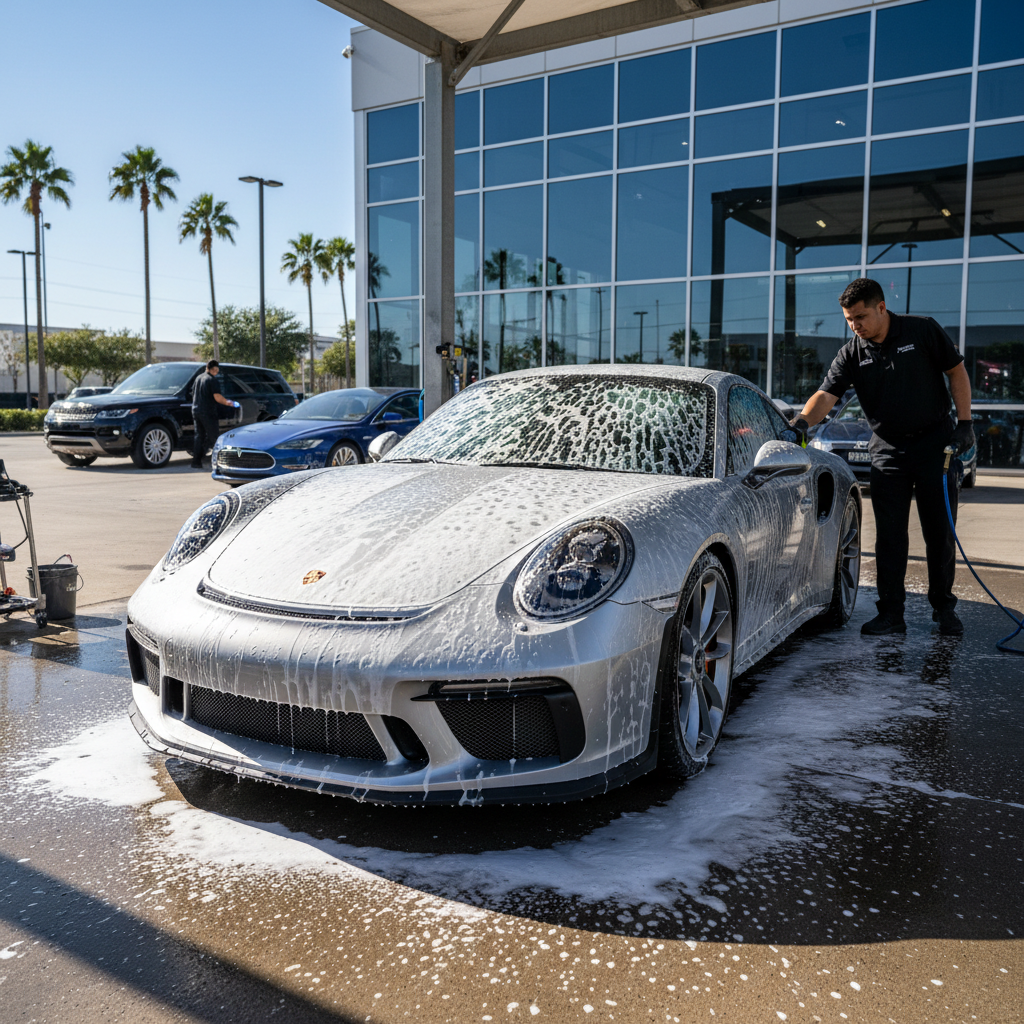
A clear guide to brush-free washing, paint safety, and what Lakeway drivers should look for before choosing a wash.
8+ years on Lake Travis · Hand wash, not machines · By-appointment hand car wash in Lakeway, TX
- A car wash without brushes reduces uncontrolled friction on paint.
- Touchless and hand wash methods are different; process matters most.
- Coated and dark vehicles benefit from clean media and careful drying.
- Lake Travis conditions make regular brush-free washing worthwhile.
- Choose an appointment-based wash that can slow down for the vehicle.
A car wash without brushes is a wash process that avoids rotating bristles and high-friction tunnel equipment. The safest versions rely on controlled hand contact, clean wash media, careful rinsing, and proper drying. In Lakeway TX, that matters because heat, limestone dust, road film, and lake traffic can punish paint quickly.
What is a car wash without brushes?
A car wash without brushes is any exterior cleaning method that does not use spinning cloth, foam fingers, nylon bristles, or automated brush assemblies to scrub the vehicle. The phrase can describe several different approaches, but they are not equal.
Some facilities use a touchless system, where detergents and high-pressure water do most of the work. Others use a true hand wash, where a trained person cleans the paint with dedicated wash mitts, safe soap, and controlled technique. The third category is more confusing: an automated wash that advertises “soft cloth” instead of brushes. Soft cloth still touches the paint, often after touching many other vehicles.
For owners who care about paint condition, the question is not only whether the wash has brushes. The better question is how contact is managed. Paint can be marred by dirty mitts, aggressive towels, poor drying, or soap that strips protection. Brush-free is a useful starting point, but process is what decides the result.
At Texas Hand Wash, we operate as a by-appointment hand wash, not a tunnel. That gives us control over vehicle flow, wash media, drying, and inspection. For Lake Travis drivers moving between Lakeway, Bee Cave, and neighborhood roads near the water, that control is the difference between clean paint and gradually accumulated wash damage.
Is a car wash without brushes better for your paint?
See our full-service hand wash options →
Yes, a properly performed car wash without brushes is usually better for paint because it reduces uncontrolled friction. Most visible wash damage comes from abrasive material being dragged across clear coat. Brushes can hold grit from previous vehicles. Once that grit meets your paint, it can leave fine swirl marks, especially on dark colors.
Clear coat is durable, but it is not immune. Dust, pollen, road film, brake residue, and dried mineral deposits all sit on top of the surface. If they are moved across the panel under pressure, they can mark the finish. A safer brush-free process focuses on loosening contamination before contact, using clean wash media, and drying without grinding residual particles into the surface.
Here is the distinction that matters: touchless does not automatically mean cleaner, and hand contact does not automatically mean unsafe. A rushed hand wash with dirty towels can be worse than a well-maintained touchless bay. A controlled hand process with proper rinse stages, gentle soap, and clean mitts is often the most balanced option because it removes bonded road film without relying on harsh chemistry alone.
I would rather slow the wash down and protect the finish than move one more vehicle through a line before the paint is ready to touch.
That owner-operator approach is especially important around Lake Travis, where summer sun bakes contaminants onto horizontal panels. A hood that looks dusty in the morning can have bonded film by late afternoon, and aggressive washing only makes that worse.
How do brushless, touchless, and hand washing compare?
Drivers often use “brushless” and “touchless” as if they mean the same thing. They do not. Brushless simply means no mechanical brushes. Touchless means no physical contact with the paint during the wash stage. A hand wash has contact, but it should be measured, clean, and intentional.
| Wash type | How it cleans | Paint risk | Best use |
|---|---|---|---|
| Automated brush wash | Rotating or moving materials scrub the vehicle | Higher risk if materials hold grit or strike trim | Convenience when paint condition is not the priority |
| Touchless wash | Chemicals and pressure remove loose soil | Lower friction, but may use stronger detergents | Light dust, winter grime, or quick rinsing |
| Professional hand wash | Pre-rinse, safe soap, clean mitts, careful drying | Low when wash media and process are controlled | Maintained vehicles, dark paint, coated paint, premium finishes |
Touchless washing has value. It can remove loose dust without touching the surface, and it can be useful when a vehicle is too dirty to contact immediately. Its limitation is film. Traffic film, sunscreen transfer around handles, bug residue, and oily road grime often need some gentle mechanical agitation. Stronger chemicals can help, but they may reduce the life of a wax, paint sealant, or neglected protective layer over time.
A professional hand wash uses contact, but it separates dirty areas from cleaner areas. Lower panels, wheels, and rear bumpers are treated differently from upper paint. The goal is not to scrub harder. The goal is to remove contamination in stages so the finish sees as little abrasion as possible.
If you are choosing between options in Lakeway TX, ask how the wash handles towels, mitts, rinse water, and drying. Those answers matter more than the sign outside.
What should a safe brush-free wash process include?
A safe brush-free wash should include inspection, pre-rinse, proper soap dwell time, controlled hand contact, separate wheel cleaning, clean drying towels, and a final check. The process should adapt to the vehicle instead of forcing every car through the same routine.
For a maintained vehicle, a careful process often looks like this:
- Inspect the paint, trim, wheels, emblems, and sensitive areas before water touches the vehicle.
- Pre-rinse thoroughly to remove loose dust and grit, especially around lower panels.
- Use a lubricating, paint-safe soap instead of household detergents or harsh degreasers.
- Wash from cleaner upper sections down to dirtier lower sections.
- Use the two-bucket method or an equivalent clean-media system to reduce contamination.
- Separate wheel and tire tools from paint tools.
- Rinse completely, including mirrors, handles, roof channels, and rear trim.
- Dry with clean microfiber towels and controlled pressure.
That sequence is simple, but the discipline matters. Many wash marks are created during drying, not washing. If minerals or grit remain on the surface, a towel can drag them across the clear coat. In the Lake Travis area, water quality and heat make drying even more important. Letting water sit on a hot panel can leave spots quickly.
For vehicles with heavier contamination, the wash may need to become a detail. A clay bar can remove bonded surface material that washing will not lift. Iron decontamination can dissolve embedded ferrous particles from brake dust and road fallout. Those steps are not needed every visit, but they are valuable before protection, gloss work, or certain coating services.
If paint already shows haze, trails, or machine marks, paint correction may be required. Washing can preserve paint condition. It cannot polish defects away. For that, the surface needs proper inspection and correction work through a detailing service such as auto detailing in Lakeway TX.
Can a car wash without brushes remove heavy dirt?
Yes, but heavy dirt needs patience and staging. The more contamination on the vehicle, the more important the pre-rinse and dwell time become. Mud, limestone dust, bug residue, and lake road film should be softened and flushed before any hand contact.
A brush-free wash is not about avoiding work. It is about doing the work in the correct order. If a vehicle comes from a wet weekend near Hudson Bend or a construction zone outside Bee Cave, the lower panels may need extra rinsing before a mitt ever touches the surface. Wheel wells, rocker panels, and rear bumper areas often carry the most abrasive material.
There are limits. Dried cement splatter, tar, overspray, and deeply bonded contamination are not normal wash problems. They require specific chemical or detailing procedures. Scrubbing harder is the wrong answer. More pressure can damage trim, force water into sensitive areas, or mar the clear coat. Better cleaning comes from using the right method for the contaminant.
At Texas Hand Wash, our full-service hand wash in Lakeway TX is designed for regular maintenance. If the vehicle needs deeper work, we will identify that instead of pretending every problem belongs inside a basic wash appointment. That is part of being 8+ years on Lake Travis: the local conditions are familiar, and so are the shortcuts that fail.
Is a brush-free wash safe for ceramic coated vehicles?
A brush-free wash is one of the best choices for a coated vehicle when the technique is correct. A ceramic coating is not a force field. It can improve release, gloss, and water behavior, but aggressive washing can still dull the surface or reduce performance over time.
Most modern coatings rely on silica-based chemistry, often discussed as SiO2. When maintained properly, the surface tends to feel slick and look glossy. Water behavior is often hydrophobic, meaning it beads and sheets more readily. That makes washing easier, but it does not eliminate the need for safe contact and clean drying.
Coated vehicles should avoid harsh tunnel brushes and repeated strong detergents. The maintenance wash should use coating-safe soap, thorough rinsing, and towels that are clean enough for finish work. If the coating appears weak, the cause may be contamination sitting on top, not coating failure. A careful decontamination wash can restore some performance by clearing the surface.
For new coating installations, surface preparation matters more than most owners realize. A proper process may include wash, chemical decontamination, correction where needed, and an IPA wipe-down before the coating is applied. That final wipe helps remove polishing oils so the coating can bond to clean paint. If you are considering long-term protection, review our ceramic coating service in Lakeway TX before choosing a maintenance routine.
The best coating maintenance is boring in the right way: frequent enough washing, gentle chemistry, clean towels, no brushes, and no unnecessary abrasion.
What should Tesla owners know about brush-free washing?
Tesla owners should use a brush-free wash process and enable Tesla wash mode when appropriate. Tesla vehicles have flush handles, cameras, sensors, charge ports, and software-controlled functions that deserve attention during washing. Avoiding brushes reduces the chance of marring paint or catching trim.
Many Tesla paint finishes show wash marks easily, especially darker colors. That does not mean they cannot be washed safely. It means the process must be controlled. A careful pre-rinse, clean microfiber, gentle soap, and mindful drying are more important than speed. The same is true for vehicles with gloss black trim or piano-black pillars, which can mark faster than painted panels.
Before washing, owners should close windows, confirm the charge port is closed, fold mirrors if needed, and follow manufacturer instructions for car wash settings. A by-appointment setting also helps because the vehicle is not rushed into a moving tunnel environment where timing and automated equipment dictate the process.
Lakeway and Steiner Ranch drivers often commute on roads that add dust quickly, then park in strong sun. That combination can make water spots and bonded film more obvious on smooth EV body panels. Regular gentle washing is usually better than waiting until the vehicle is heavily soiled and then requiring stronger cleaning.
How often should you use a car wash without brushes in Lakeway TX?
Most well-kept vehicles in Lakeway TX benefit from a brush-free maintenance wash every one to three weeks, depending on driving, storage, paint color, and protection. Vehicles parked outside near Lake Travis may need more frequent washing during pollen season, after storms, or after long highway drives.
Frequency is not only about appearance. Contaminants get harder to remove the longer they sit. Bird droppings, bug residue, tree sap, and mineral-heavy water spots can etch or stain if ignored. The goal is to remove them before they become paint problems.
Monthly memberships make sense for owners who want consistency without thinking about each appointment as a separate decision. Texas Hand Wash offers monthly memberships only, with service by appointment so the work stays controlled. You can view the membership structure at monthly car wash memberships or use book an appointment when you are ready to schedule.
If you drive from Bee Cave to Lakeway daily, park under trees, or spend weekends near marinas and lake roads, your vehicle will collect more than light garage dust. A clean, protected vehicle is easier to maintain, but it still needs regular attention.
What are the signs a brush wash has damaged your paint?
The most common signs are circular wash marks, dullness under sunlight, fine scratches near door handles, and hazy black trim. Damage often appears gradually, so many owners do not notice it until the vehicle is under direct sun or bright shop lighting.
Look at the hood, roof, and upper door panels after washing. If the paint looks clean in shade but spiderwebbed in sun, the clear coat may have accumulated wash marring. Dark blue, black, red, and deep gray vehicles tend to show it first. White and silver paint can hide the same damage until lighting reveals it.
Brush-related marking often follows repeated patterns. You may see trails where rotating materials passed over the same areas again and again. Automated systems can also stress mirrors, license plate frames, loose trim, and accessories. Even if nothing breaks, the finish can lose clarity over time.
Some defects can be improved with paint correction. The right correction plan depends on paint thickness, defect depth, vehicle age, and owner expectations. A maintenance wash will not remove established swirls, but it can prevent new ones from being added after correction.
How do you choose the best car wash without brushes near Lake Travis?
Choose a brush-free wash by evaluating process, not marketing language. Ask what touches the paint, how towels are managed, how dirty lower panels are handled, and whether the business is willing to slow down for vehicle condition. A good answer should be specific.
Use these questions before trusting a wash with your vehicle:
- Is the wash a tunnel, touchless bay, or hand wash by appointment?
- Are paint towels separated from wheel and tire towels?
- Is the vehicle pre-rinsed before contact?
- Are coated vehicles handled differently from unprotected vehicles?
- Does the team identify when a detail is needed instead of overselling a wash?
- Is drying performed with clean microfiber rather than reused shop towels?
For Lake Travis owners, local familiarity also helps. Roads around Hudson Bend, Bee Cave, and Lakeway carry different kinds of dust, pollen, and road film throughout the year. A shop that sees those conditions every week can recommend a realistic maintenance rhythm.
Texas Hand Wash is built around controlled work: appointment scheduling, full-service hand washing, detailing, coating maintenance, and clear communication. We do not run a tunnel, and we do not rely on brushes to move volume. The service is slower by design because the finish deserves that kind of handling.
Sources
- Tesla Owner's Manual
- U.S. EPA Stormwater Discharges
- Consumer Reports Car Washing Guide
- SEMA News and Industry Resources
Key Takeaways
- A car wash without brushes reduces uncontrolled friction on paint.
- Touchless and hand wash methods are different; process matters most.
- Coated and dark vehicles benefit from clean media and careful drying.
- Lake Travis conditions make regular brush-free washing worthwhile.
- Choose an appointment-based wash that can slow down for the vehicle.
Frequently Asked Questions
What is a car wash without brushes?
A car wash without brushes is a wash method that avoids rotating brush equipment. It may be touchless or performed by hand with clean wash media, proper soap, and controlled drying.
Is a brushless car wash safe for paint?
It is safer when the process reduces friction and uses clean materials. A professional hand wash without brushes can protect paint better than a high-volume tunnel.
Can a brush-free wash clean a very dirty car?
Yes, but heavy dirt should be loosened with rinsing and dwell time before contact. Some bonded contamination may require detailing rather than a standard wash.
Is a car wash without brushes good for ceramic coatings?
Yes. Ceramic coated vehicles should avoid abrasive brushes and harsh washing. Gentle soap, clean microfiber, and careful drying help preserve coating behavior.
Tags: car wash without brushes, Lakeway TX, Lake Travis, hand wash, ceramic coating
Ready for a Premium Hand Wash?
Texas Hand Wash provides 100% hand-washed car care in Lakeway, TX. Book your appointment or explore our Full Service Hand Wash, Auto Detailing, Ceramic Coating, and Unlimited Membership.